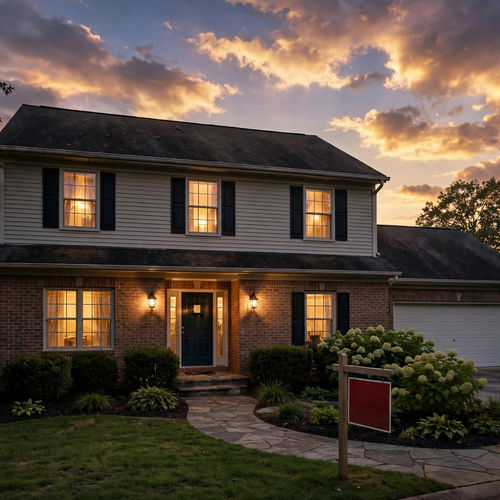
With 30-year rates near 7.4% and Charlotte's median sold price around $435,000, that rule produces very different budgets depending on your income and down payment. A lender's pre-approval turns the rule into your real number.
What is the 28/36 rule?
It is the guardrail most lenders use. The 28 caps your housing payment: principal, interest, taxes, insurance, and HOA, at 28% of gross monthly income. The 36 caps everything: housing plus car payments, student loans, and minimum credit card payments, at 36%. Example: at $120,000 of household income ($10,000/month), housing should stay near $2,800/month and total debts under $3,600/month.
What do rates look like right now?
Mortgage News Daily put the 30-year fixed at 7.37% on October 16, 2026, holding near its highest level since November 2023. Rates have climbed more than a full percentage point this year on stubborn inflation (September CPI came in hot at 3.7%), and waiting for a meaningful drop has been an expensive strategy this year. The buyers winning right now are the ones who buy the payment they can afford and plan to refinance if rates ever cooperate.
What does that mean in Charlotte?
Charlotte's median listing sits near $439,000 with a median sold price around $435,000 (August 2026). At 7.37% with 10% down on a $435,000 home, principal and interest alone run roughly $2,700/month, before taxes, insurance, and any HOA. Run your own income through the 28/36 rule against that payment and you will see quickly whether Charlotte's middle of the market fits, or whether you should be looking at a different price band or a bigger down payment.
What costs do buyers forget?
Three budget killers. HOA dues: much of Charlotte's townhome and condo stock carries $200 to $400+ a month, and it counts in your 28%. Maintenance: plan about 1% of the home's value per year. PMI: under 20% down, private mortgage insurance rides along until you build enough equity. Add all three before you fall in love with a payment.
What I tell my buyers
Run the 28/36 math before you fall in love with a kitchen. The payment that looks fine on a pre-approval letter can feel very different once the HOA, taxes, and insurance show up every month. I want to help find you the perfect house, but making sure you don't end up house poor is something I also want to help avoid.
The bottom line
Affordability is not the number on your pre-approval letter; it is the payment you can live with after the HOA, the taxes, and real life. Run the 28/36 rule, get pre-approved, and shop inside the payment, not the price. Want your real number? Get introduced to my preferred lender here and let's talk about what fits before you tour homes.
Check out this article next